
How Ansoff Matrix Marketing Strategy Drives Business Growth

Ansoff Matrix Strategy

Have you ever wondered how big brands decide where to grow next? Should they sell more of the same product? Should they enter a new market? Or should they launch something completely new? These are not easy questions. But there is a simple tool that helps businesses answer them, the Ansoff Matrix Marketing Strategy.

The Ansoff Matrix Marketing Strategy is a strategic planning tool used in marketing to help businesses identify their best opportunities for growth. It was created by Igor Ansoff, a business strategist, and published in the Harvard Business Review in 1957.

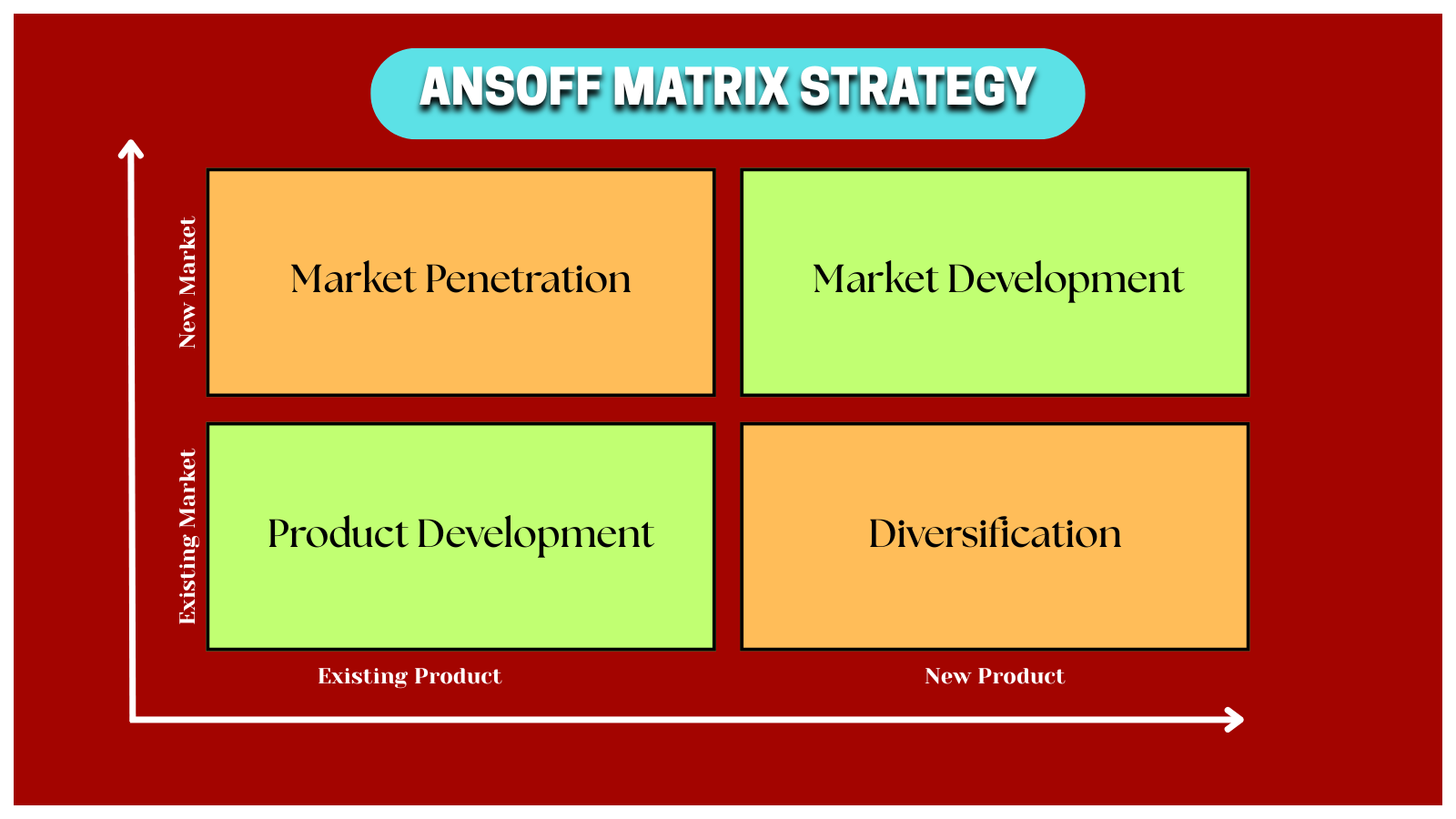
The matrix is also called the Product-Market Growth Matrix. It works by looking at two things: the products a company sells and the markets it serves. By combining these two factors existing or new products with existing or new markets, it gives four possible growth strategies.

These four strategies are: Market Penetration, Market Development, Product Development, and Diversification. Together, they are known as the four strategies of Ansoff Matrix.

The Four Strategies of the Ansoff Matrix

Look at each of the four strategies in simple terms, along with a real example from an Indian brand.

1. Market Penetration – Sell More of What You Already Have

Market penetration is the safest strategy in the Ansoff Matrix. Here, a business focuses on selling more of its existing products to its existing customers. The goal is to increase market share without changing the product or entering a new market.

Common ways to do this include cutting prices, increasing advertising, running promotional offers, or improving customer service. This strategy works well when the market still has room for growth.

Amul Ansoff Matrix
Indian Brand Example: Amul Amul is a great example of market penetration. Over the years, Amul has consistently increased its advertising spend and kept its milk and butter prices affordable for everyday Indian consumers. By running its famous “Amul Girl” ads and offering combo deals and loyalty programmes, the brand deepened its presence in markets it already served. The result? Amul became the most trusted dairy brand in India without needing to change its core products.

2. Market Development – Take Your Product to New Places

Market development means selling your existing product in a new market. The new market could be a different city, a different state, or even a different country. It could also mean targeting a new type of customer. For example, a brand that sells to adults starting to target teenagers.

This strategy carries moderate risk. The product stays the same, but the business is trying to reach people it has not served before.

Tanishq - Ansoff Matrix Strategy
Indian Brand Example: Tanishq Tanishq, the jewellery brand from Tata Group, used market development brilliantly. Originally popular with urban, upper-middle-class Indian women, Tanishq began expanding into Tier-2 and Tier-3 cities, places like Nashik, Mysore, and Jalandhar. It opened smaller, more affordable showrooms and created lightweight jewellery collections suited to smaller budgets. This allowed Tanishq to reach millions of new customers without changing its jewellery line significantly.

3. Product Development – Create Something New for Your Existing Customers

Product development is when a business creates new products for its current customers. The market stays the same, but the product changes. This happens when a brand identifies new needs or changing tastes among its existing buyers.

This strategy requires investment in research and development and carries moderate risk. However, when done well, it deepens customer loyalty and keeps the brand relevant.

Parle-g Ansoff Matrix
Indian Brand Example: Parle-G Parle Products is known for its iconic Parle-G biscuit. But as health trends shifted and customers started demanding more variety, Parle developed new products for the same loyal customer base. It launched products like Hide & Seek (chocolate biscuits), Parle Nutricrunch, and Monaco crackers all targeted at Indian snack lovers who were already buying Parle-G. This helped the brand stay fresh and relevant while keeping its existing customers engaged.

4. Diversification – Enter New Markets with New Products

Diversification is the boldest and riskiest strategy in the Ansoff Matrix. Here, a business launches a completely new product in a completely new market. Everything is unfamiliar, the product, the customers, and the competition.

But when it works, diversification can open massive new revenue streams and protect the company from depending too heavily on one business area.

Reliance Ansoff Matrix
Indian Brand Example: Reliance Industries Reliance Industries started as a textile company in the 1960s. Over the decades, it diversified into petrochemicals, oil refining, retail, and telecom, all completely different industries. The most dramatic example was the launch of Jio in 2016, a telecom service targeting mobile internet users across India. This was a brand-new product for a brand-new mass market. Jio disrupted the entire telecom sector and gave Reliance a dominant position in digital India, a textbook example of successful diversification.

Why the Ansoff Matrix Matters?

The Ansoff Matrix Marketing Strategy is not just for large corporations. Small businesses, startups, and even solo entrepreneurs can use it to make smarter decisions about where to grow next.

It forces you to think clearly. Instead of chasing every opportunity, the matrix helps you evaluate risk and choose the right path for your business at the right time. Market Penetration is the safest route. Diversification is the most daring. Market Development and Product Development fall somewhere in between.

Understanding the Ansoff Matrix marketing strategy gives you a clear framework to plan your next big move, whether you are a student studying marketing or a business owner ready to scale.

Final Thoughts

The Ansoff Matrix is one of the most practical tools in marketing. It has stood the test of time because it asks a very simple question: where will your growth come from?

As we saw with Amul, Tanishq, Parle, and Reliance, Indian brands have successfully applied all four strategies of the Ansoff Matrix. Each brand chose the right strategy based on its goals, its resources, and its customers and that is exactly what the matrix is designed to help you do.

Now that you understand the Ansoff Matrix, you are one step closer to thinking like a real marketing strategist.