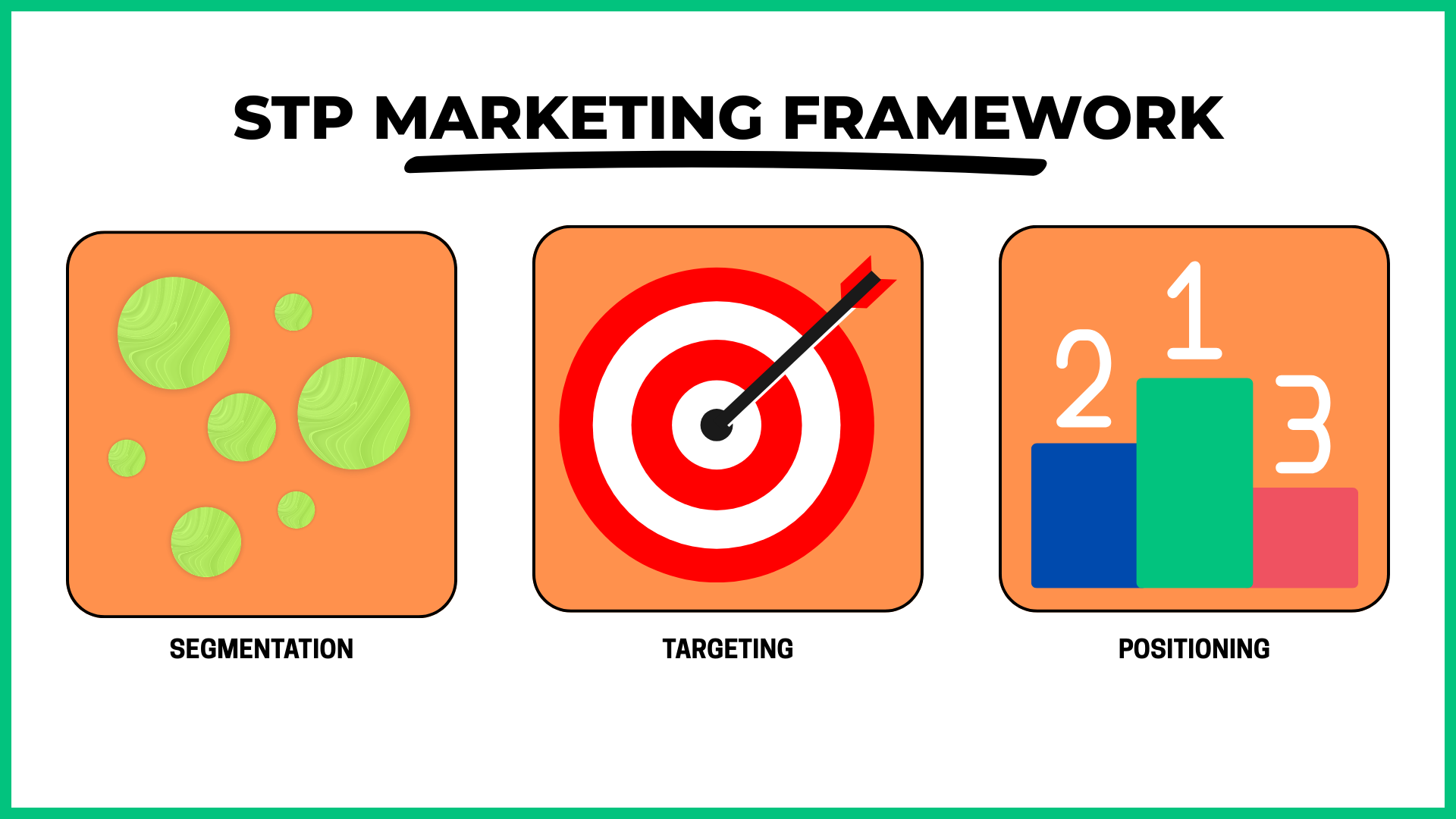

Imagine you’re having a birthday party and want to invite friends. You wouldn’t invite your entire school of 500 kids, right? Instead, you’d pick specific friends who like the same games you do. That’s basically what STPD marketing framework is all about!
STPD marketing framework stands for: Segmentation, Targeting, Positioning, and Differentiation.
Segmentation, Targeting, Positioning, and Differentiation.
S = Segmentation (Splitting people into groups)
This is like sorting your toys into different boxes. Companies look at all their potential customers and split them into smaller groups based on things like age, where they live, what they like, or how much money they have.
For example, a toy company might have one group of 5-year-olds who like dolls, another group of 10-year-olds who like video games, and another group of teenagers who like sports equipment.
T = Targeting (Picking which group to focus on)
After splitting everyone into groups, the company picks which group they want to sell to. It’s like deciding whether you want to play soccer or basketball at recess—you can’t do both at the same time, so you pick one!
Companies ask themselves: “Which group of people will love our product the most?”
P = Positioning (Deciding how you want people to see you)
This is about creating a special picture in people’s minds. Think about how you want your friends to remember you as the funny kid, the smart kid, or the athletic kid? Companies do the same thing. They decide what special thought they want to put in customers’ heads.
D = Differentiation (Being different from everyone else)
This means showing people why you’re special and different from others. It’s like when you’re the only kid in class who can do a cartwheel that makes you stand out! Companies show customers what makes them unique compared to other similar companies.
Real-World Example #1: Coca-Cola
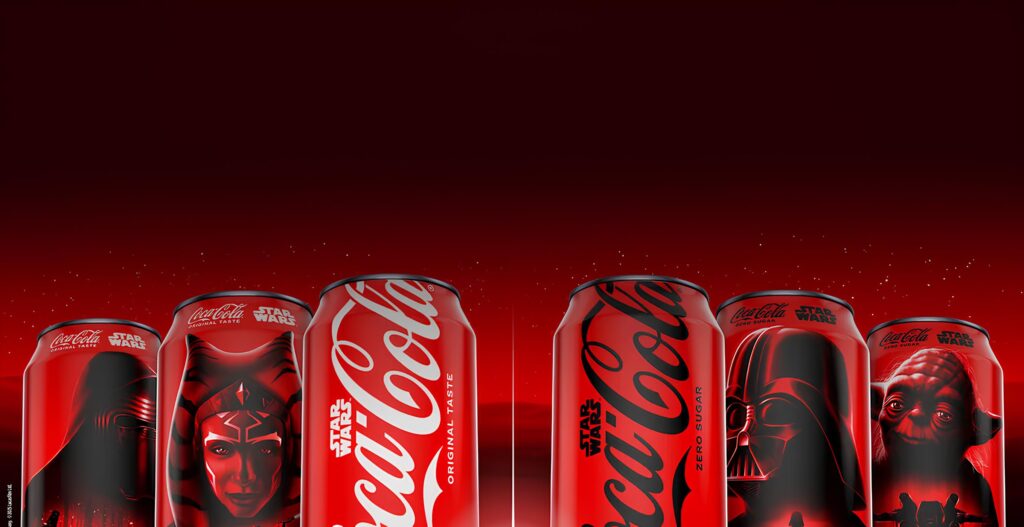
Coca-Cola is really smart about using STPD marketing!
How they use it:
- Segmentation: Coca-Cola splits people into groups like teenagers who want energy, health-conscious adults, and families.
- Targeting: They focus heavily on young people aged 12-30 who enjoy social activities and want refreshing drinks.
- Positioning: They position themselves as the drink of “happiness” and “togetherness”—not just a soda.
- Differentiation: Their unique red color, classic bottle shape, and secret recipe make them different from Pepsi and other sodas.
The Numbers: Coca-Cola’s STPD strategy works amazingly well! In 2022, they sold products in over 200 countries and generated $43 billion in revenue. Their “Share a Coke” campaign, which put popular names on bottles (a differentiation strategy targeting young people), increased their sales by 2.5% in the U.S. and led to 500 million personalized bottles being sold. Their brand value reached $97.9 billion in 2023, making them one of the most valuable beverage brands in the world.
Real-World Example #2: LEGO
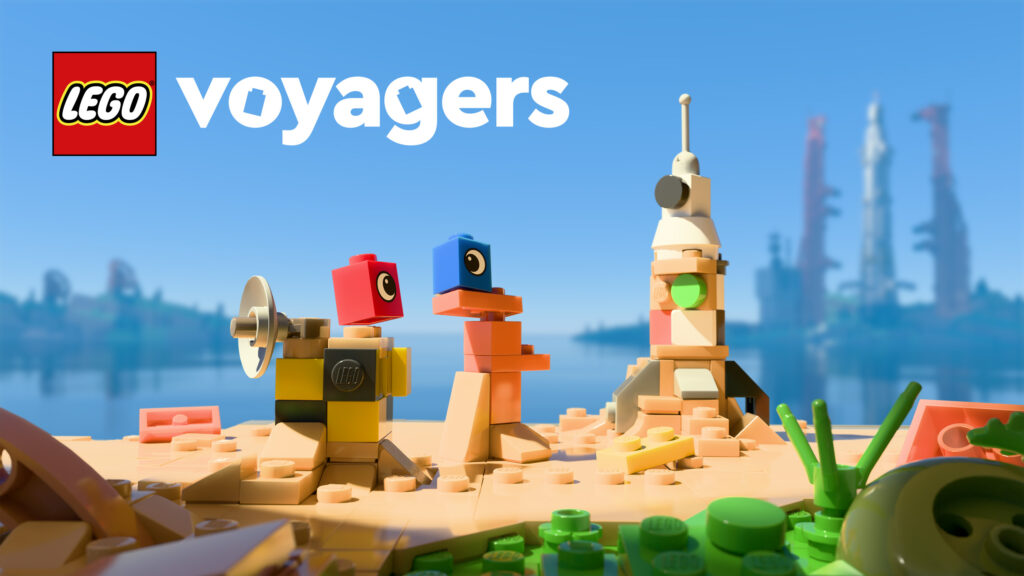
LEGO uses STPD brilliantly to sell their building blocks!
How they use it:
- Segmentation: LEGO divides customers by age (toddlers, kids, teenagers, adults) and interests (Star Wars fans, architecture lovers, etc.).
- Targeting: While they sell to kids, they’ve specifically targeted adults aged 18+ with complex sets, which is a growing market.
- Positioning: They position themselves as “tools for creativity and learning,” not just toys.
- Differentiation: Their unique interlocking brick system, high quality, and licensed partnerships (like Harry Potter and Marvel) make them special.
The Numbers: LEGO’s STPD approach led to incredible growth! Their adult-focused product line (LEGO 18+) grew by 25% in 2022 and now represents about 20% of their total sales. In 2023, LEGO’s revenue reached $9.7 billion, a 17% increase from the previous year. Their targeting of adult fans helped them become the world’s largest toy company by sales, overtaking competitors. Additionally, 90% of U.S. households with children under 12 own LEGO products, showing their effective segmentation and targeting strategy.
Why STPD Matters?
Think of STPD marketing framework like this: If you tried to be friends with everyone in the world, you’d be exhausted and probably wouldn’t have any close friends. But if you focus on people who like the same things you do, you can build strong friendships.
Companies use STPD the same way. Instead of trying to sell to everyone (which wastes time and money), they focus on specific groups of people who will really love what they offer. Then they show those people why they’re the best choice.
The simple formula: Find the right people, Talk to them directly, Show them why you’re special, Be different from competitors.
When companies do this well, like Coca-Cola and LEGO, they don’t just sell more products, they create fans who love them and keep coming back!
Leave a Reply