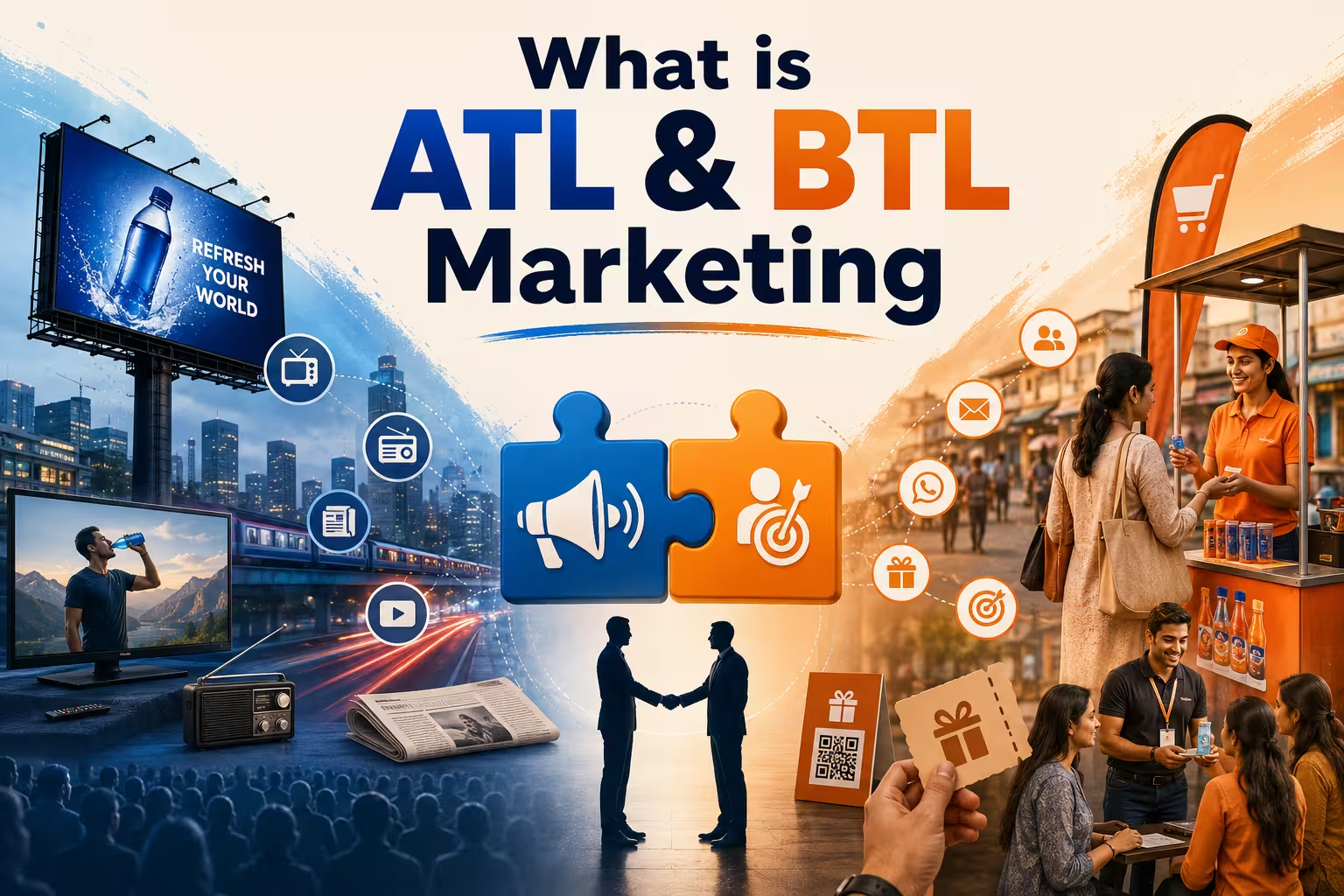

Think about the last time you hummed a jingle from a TV commercial and then walked into a store and grabbed a product because a salesperson handed you a free sample. Two completely different experiences, right? Yet both were marketing. That’s ATL and BTL at work, and understanding the difference can change how you think about building a brand.
What Is ATL Marketing?
ATL stands for Above The Line marketing. It’s the kind of advertising that casts a wide net, think television, radio, newspapers, billboards, and digital platforms like YouTube. The goal isn’t to sell to one person; it’s to build awareness among millions at once.
ATL campaigns don’t speak to a specific customer. They speak to everyone. That’s both their strength and their limitation.
What Is BTL Marketing?
BTL stands for Below The Line marketing. This is targeted, personal, and direct. We’re talking about in-store promotions, email campaigns, WhatsApp marketing, road shows, loyalty programs, product demos, and direct mailers.
Where ATL shouts to the crowd, BTL whispers to the right person at the right moment.
The Difference Between ATL, BTL, and TTL Marketing
| Type | Reach | Targeting | Examples |
|---|---|---|---|
| ATL | Mass audience | Broad | TV ads, hoardings, radio |
| BTL | Niche/specific | Highly targeted | Demos, direct mail, events |
| TTL | Both combined | Mixed | Digital campaigns + activations |
TTL is the modern approach most brands now prefer using ATL to create awareness and BTL to convert that awareness into action. The difference between ATL BTL and TTL marketing essentially comes down to reach vs. precision vs. integration.
ATL vs BTL Marketing: Advantages and Disadvantages
Understanding ATL vs BTL marketing advantages and disadvantages helps you spend smarter:
| Particular | ATL | BTL |
|---|---|---|
| Advantage | Massive reach, strong brand recall | High ROI, measurable, personal |
| Disadvantage | Expensive, hard to measure | Limited reach, time-intensive |
| Best for | Brand building, launches | Lead generation, conversions |
Neither is better. They solve different problems.
Real World Example
ATL: Amul
Amul’s outdoor hoarding campaign, the iconic “Amul Girl” has been running continuously since 1967, making it one of the longest-running ATL campaigns in the world. The campaign spans billboards across 1,000+ Indian cities and generates an estimated ₹30–35 crore in annual media value through earned attention alone. Amul’s brand recall among Indian households consistently exceeds 90%, according to industry surveys, largely attributed to this sustained ATL presence.
BTL Example: Hindustan Unilever (HUL): Project Shakti
HUL’s Project Shakti is a textbook BTL strategy. It trained over 1.36 lakh rural women entrepreneurs (Shakti Ammas) to distribute and personally sell HUL products door-to-door across 18 states and 1.8 lakh villages. The result? Rural sales through this network contribute to roughly 8–10% of HUL’s total rural revenue, directly linking BTL activation to measurable business growth.
| Brand | Strategy | Key Metric |
|---|---|---|
| Amul | ATL – Outdoor/Billboard | ₹30–35 Cr annual media value; 90%+ brand recall |
| HUL (Project Shakti) | BTL – Direct rural distribution | 1.36L agents; 8–10% of rural revenue |
Conclusion
If you’re launching a new brand or product, you likely need ATL to get noticed. But if you want to convert awareness into loyal customers, BTL is where the real work happens. The smartest brands like HUL use both, knowing that neither alone is the full picture.
Marketing isn’t about choosing one channel. It’s about knowing when to be loud and when to get personal.
Leave a Reply