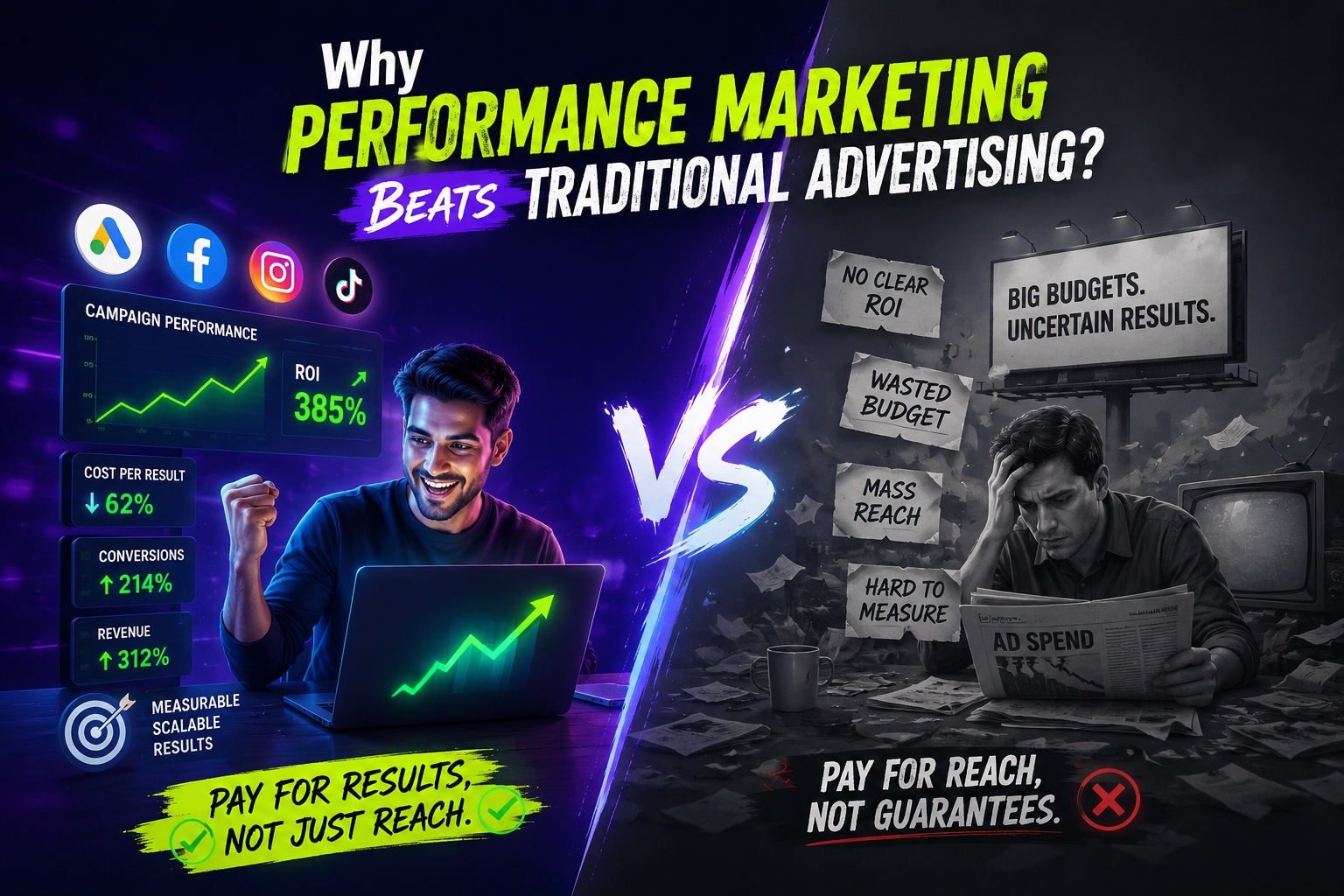

Performance marketing is an online marketing and advertising program in which advertisers pay marketing companies only when a specific action is completed, such as a sale, lead or click. This definition from Gartner represents the industry standard perspective. Performance marketing is a strategic approach to digital advertising where payment is directly tied to the achievement of specific, measurable actions. Often referred to as “pay-for-performance” advertising, this model shifts the risk from the advertiser to the publisher or marketing partner, as payment is only rendered after a desired outcome is achieved.
The history of Performance Marketing begins in the late 90s when Search Engine Optimization and Search Engine Advertising appeared. To date, Performance has gone beyond the familiar understanding of these two areas and covers virtually all channels of the digital sphere.
Think of performance marketing like paying a taxi driver. You don’t pay upfront for the journey, you only pay when you reach your destination. Similarly, performance marketing means you pay for actual results: when someone clicks your ad, signs up for your service, or purchases your product.
Unlike traditional advertising where brands pay a fixed fee to reach audiences on billboards, TV, or radio regardless of actual sales, performance marketing connects payment directly to outcomes. Performance marketing is an online marketing approach driven by results. Simply put, it involves making use of online advertising channels to place ads and paying only when someone views or clicks on them.
Current examples illustrate this shift. E-commerce brands using Amazon Ads pay per click or conversion. SaaS companies running Google Ads campaigns pay only when users click their ads or complete sign-ups. Social media brands advertising on Instagram pay based on actual app installations or product purchases tracked through precise conversion metrics.
Unacademy (Founded 2015, Major Growth 2018 onwards)
Unacademy, an online education platform, leveraged performance marketing extensively to scale user acquisition. The brand implemented targeted Google Ads campaigns focusing on Cost Per Acquisition (CPA) models, reaching students searching for online courses. By tracking conversion metrics meticulously, Unacademy optimized campaigns in real-time, reducing customer acquisition cost from initial rates while maintaining profitability. The brand achieved rapid growth through performance-driven strategies, eventually raising significant venture funding based on demonstrated metrics showing 7-8x return on ad spend. Their success stemmed from obsessive focus on measurable outcomes and continuous optimization.
Quiznos Franchise Digital Campaign (2019-2021)
Quiznos, the sandwich chain, attempted aggressive performance marketing campaigns in 2019 to boost franchise digital orders. The brand focused heavily on cost-per-click and cost-per-order metrics but overlooked critical factors. The campaign attracted low-quality leads from performance-focused channels optimized for volume rather than profitability. Many customers acquired through aggressive CPC bidding made single orders and never returned. Customer lifetime value failed to justify acquisition costs, resulting in negative ROI within months. The campaign ignored brand building and customer retention, focusing solely on short-term transaction metrics. This demonstrates how performance marketing can fail when brands prioritize metrics over customer value alignment.
Data & Metrics
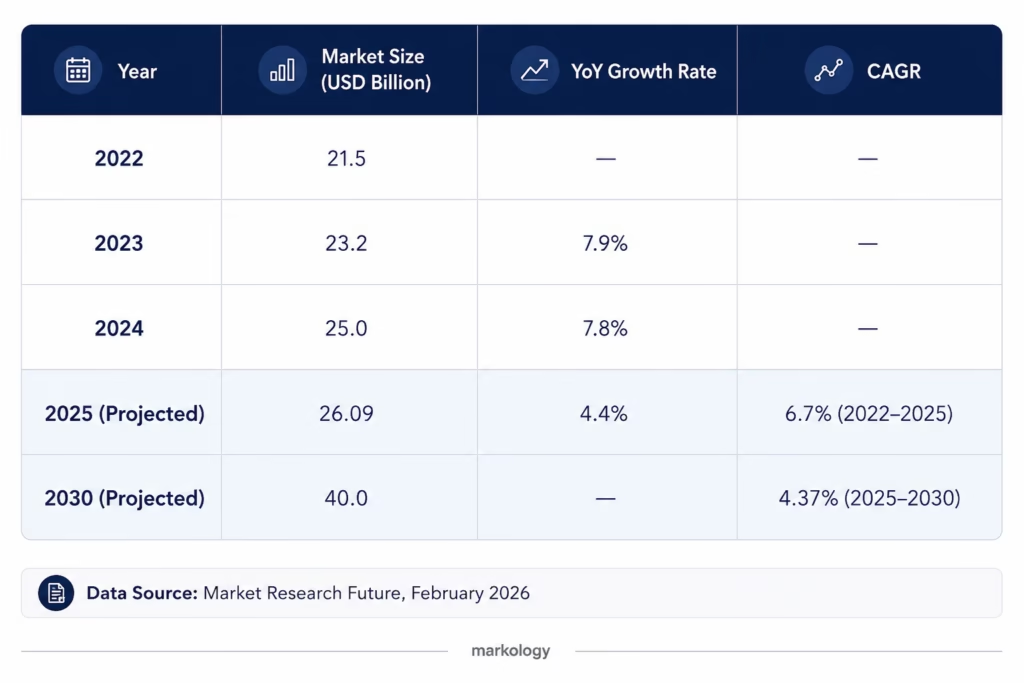
Performance Marketing Services Market Growth
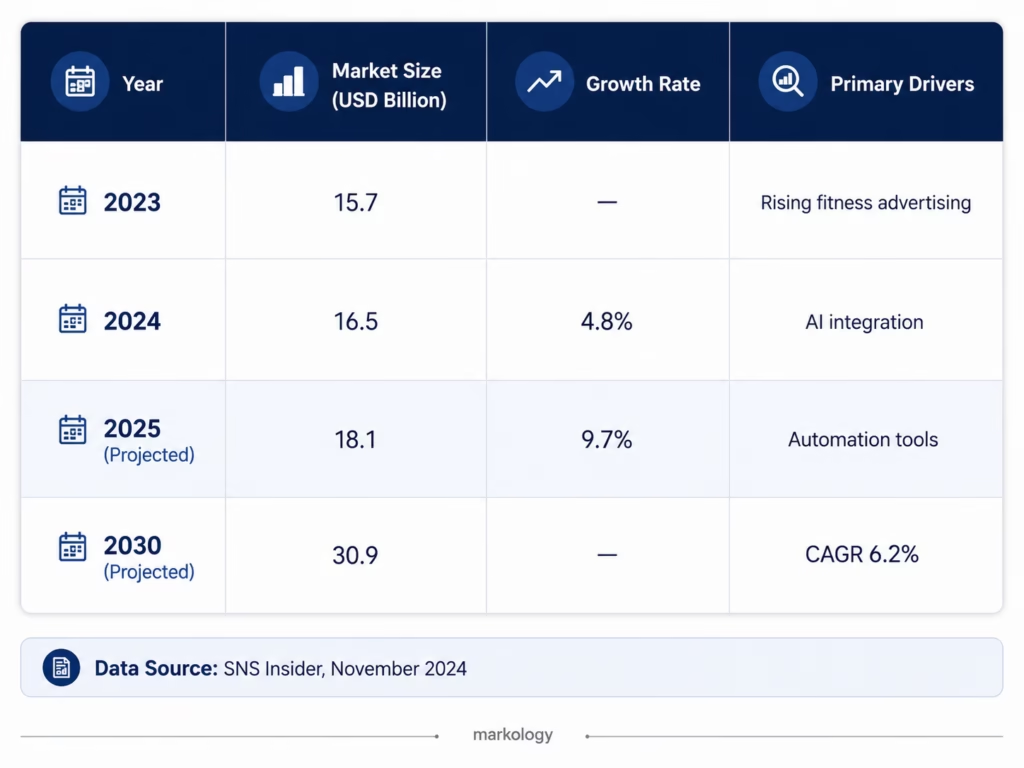
Performance Marketing Software Market Expansion
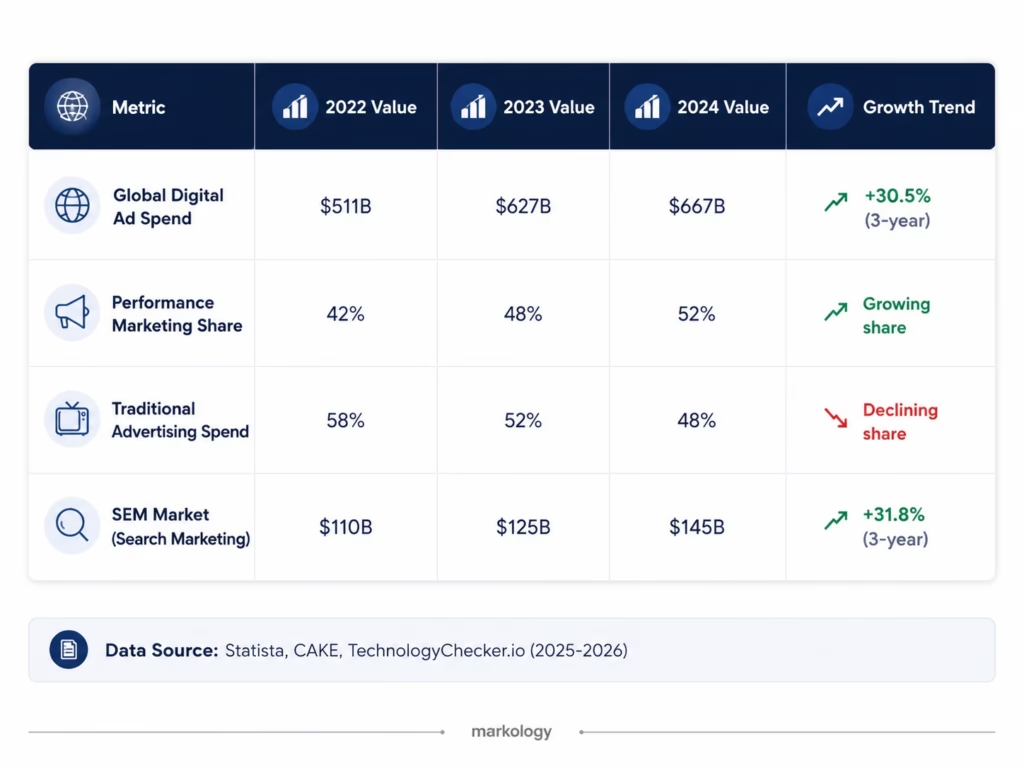
Digital Ad Spend Allocation Shift (2022-2025)
Marketing effectiveness
Performance marketing fundamentally changed how brands evaluate advertising investment. According to PX’s 2024 State of the Industry, nearly 60% of marketers are happy with the results. With every metric being tracked in real-time, there’s no danger of wasting money on failing marketing campaigns. The quantitative data confirms this shift. From 2022 to 2025, performance marketing’s market share grew from 42% to 52% of total digital ad spend, while traditional advertising declined correspondingly.
What sets performance marketing apart is its unwavering focus on results. It’s not about paying for potential reach, it’s about investing in tangible outcomes, ensuring that every dollar of ad spend is accountable, trackable, and optimized for maximum Return on Investment (ROI). Brands like Unacademy succeeded because they aligned business metrics with marketing objectives. Those like Quiznos failed because they confused marketing metrics with business outcomes.
Challenges brands face with performance marketing
1: Attribution Complexity
Customers interact with multiple touchpoints before converting. Performance marketing struggles when brands cannot accurately determine which channel or campaign deserves credit for a conversion. A customer might click a Google Ad, then see a Facebook retargeting ad, then visit directly. Attribution models (first-click, last-click, multi-touch) often produce conflicting results, making true ROI calculation difficult.
2: Data Privacy Restrictions
iOS privacy changes and third-party cookie deprecation reduced marketers’ ability to track user behavior. Performance marketing campaigns relying on cross-site tracking lost effectiveness. Apple’s App Tracking Transparency and Google’s cookie phase-out forced brands to pivot to first-party data strategies, requiring infrastructure investments many smaller brands cannot afford.
3: Short-term Focus Over Brand Building
Performance marketing optimizes for immediate conversions but can damage brand equity long-term. Aggressive bidding on cheap clicks attracts low-quality customers with no lifetime value. Brands focusing exclusively on CPA metrics neglect brand awareness, customer experience, and retention, ultimately creating unsustainable growth.
4: Rising Customer Acquisition Costs
As more brands compete for identical keywords and audiences, cost per click and cost per acquisition continuously increase. Markets become saturated, reducing campaign profitability even as conversion rates remain stable.
Key performance metrics
Primary Conversion Metrics
- Cost Per Acquisition (CPA): Total campaign cost divided by conversions. Tracks efficiency of customer acquisition spending.
- Return on Ad Spend (ROAS): Revenue generated divided by ad spend. A 5x ROAS means every dollar spent generates five dollars in revenue.
- Conversion Rate: Percentage of clicks converting to desired action. Industry benchmarks range 2-5% for most sectors.
Secondary Health Metrics
- Customer Lifetime Value (CLV): Total revenue a customer generates over their relationship with the brand. Critical for assessing true acquisition cost viability.
- Cost Per Click (CPC): Amount paid per click on ad. Varies dramatically by platform and keyword competitiveness.
- Click-Through Rate (CTR): Percentage of impressions resulting in clicks. Average paid search CTR is 3.17% according to industry data.
Retention and Quality Metrics
- Quality Score: Google’s rating of ad relevance, landing page quality, and historical click-through rate. Directly impacts CPC and ad placement.
- Return Rate: Percentage of first-time customers making repeat purchases. Indicates whether acquired customers have genuine value alignment with brand.
Current market landscape
The digital advertising and marketing market worldwide was estimated at $627 billion in 2023, $667 billion in 2024 and is expected to cross $1.5 trillion by 2030 at a CAGR of 13.9%. Within this expanding market, performance marketing channels dominate investment allocation.
Search engine marketing (Google Ads, Bing Ads) remains the largest performance channel. Social media advertising through Facebook, Instagram, and TikTok represents the fastest-growing segment. Affiliate marketing and programmatic buying complete the performance marketing ecosystem.Performance marketing is an online marketing and advertising program in which advertisers pay marketing companies only when a specific action is completed, such as a sale, lead or click. This definition from Gartner represents the industry standard perspective. Performance marketing is a strategic approach to digital advertising where payment is directly tied to the achievement of specific, measurable actions. Often referred to as “pay-for-performance” advertising, this model shifts the risk from the advertiser to the publisher or marketing partner, as payment is only rendered after a desired outcome is achieved.
The history of Performance Marketing begins in the late 90s when Search Engine Optimization and Search Engine Advertising appeared. To date, Performance has gone beyond the familiar understanding of these two areas and covers virtually all channels of the digital sphere.
Leave a Reply