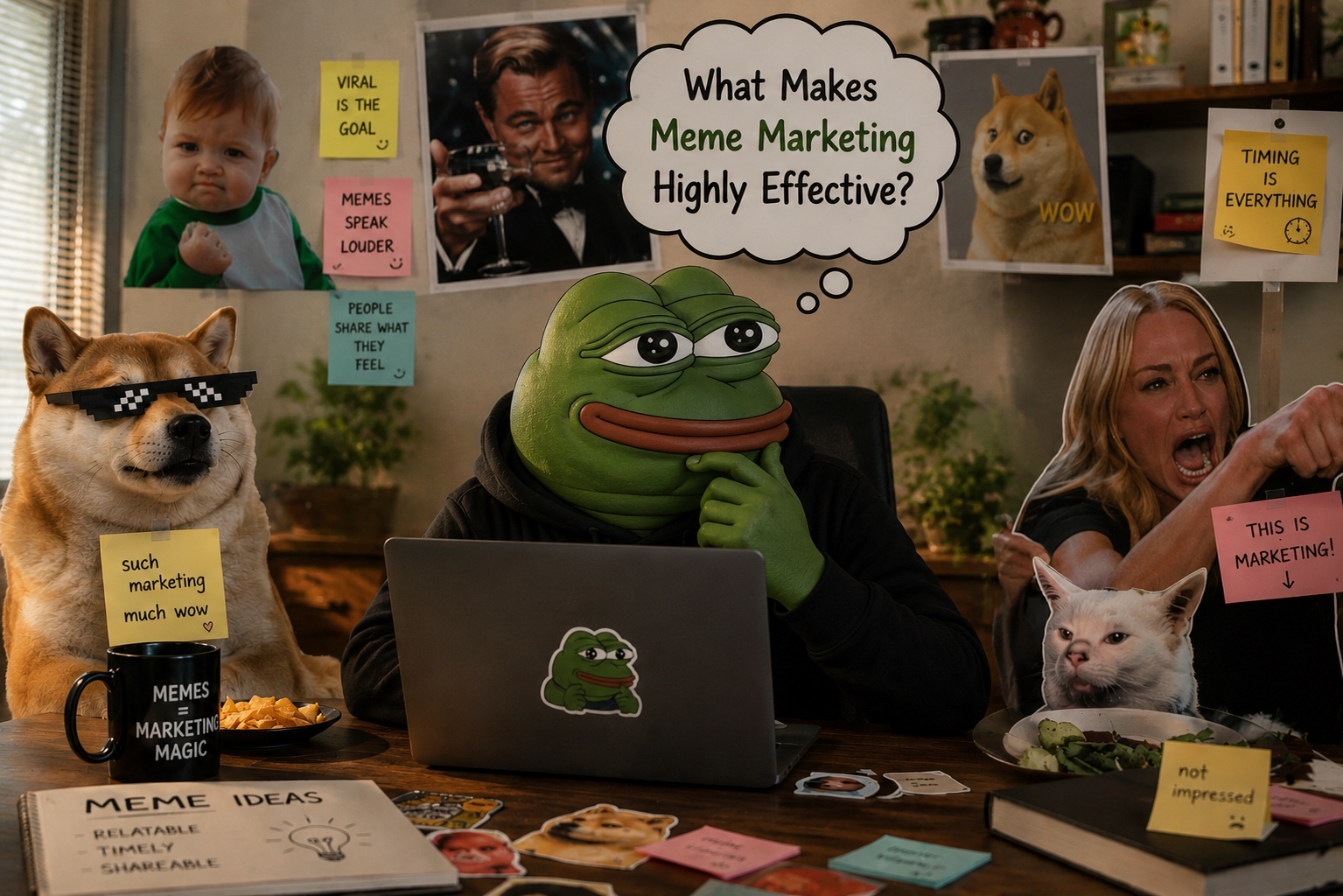

Meme marketing is a digital marketing strategy that uses Internet memes in brand promotion and advertising campaigns. This approach uses culturally relevant humor and recognizable meme formats to engage audiences on social media platforms. Unlike traditional viral marketing, which relies on viewers passively sharing content, meme marketing encourages active participation and community involvement in creating brand-related content.
The term originates from evolutionary biologist Richard Dawkins’ 1976 work “The Selfish Gene,” where he defined memes as discrete pieces of information, ideas, or behaviors that propagate between people through cultural learning processes. Scholars have identified seven main meme characteristics: fidelity (replication through copying), fecundity (rapid transmission), longevity, meme fitness, ease of copying and translation, distinctness, and humor.
Meme marketing is the practice of promoting a product or service using memes, an Internet-based phenomenon involving viral pieces of user-generated content, including images, articles, and video or audio clips. This latest form of viral marketing is starting to gain prominence in recent years following the infiltration of social media into everyday life thanks to the rapid advancement in communication technologies.
CURRENT TRENDING EXAMPLES
Imagine scrolling through Instagram and seeing a relatable image with witty text that makes you laugh instantly. You share it with friends. Within hours, it reaches thousands of people. That is meme marketing in action.
Meme marketing transforms traditional advertising by replacing corporate messaging with humor that audiences genuinely enjoy. Rather than interrupting user experience with sales pitches, memes entertain first and market second. This inversion of advertising priorities creates authentic engagement.
Current examples demonstrate this shift clearly. Duolingo posts absurdist humor on TikTok featuring their mascot, users don’t feel sold to; they feel entertained. When McDonald’s embraced the unexpected chaos surrounding their Grimace Shake, the brand didn’t control the narrative, it participated in it. When brands recognize trending meme formats and adapt them authentically, audiences reward them with shares, comments, and genuine affection toward the brand.
Modern meme marketing succeeds because younger audiences have become immune to traditional advertising. They scroll past polished commercials but pause for memes because memes feel created by people like them, not corporations. This perception of authenticity drives engagement that traditional marketing cannot replicate.
Zomato (Founded 2010, Meme Marketing Focus 2018 onwards)
Perspective: Cultural Resonance and Authenticity Through Language
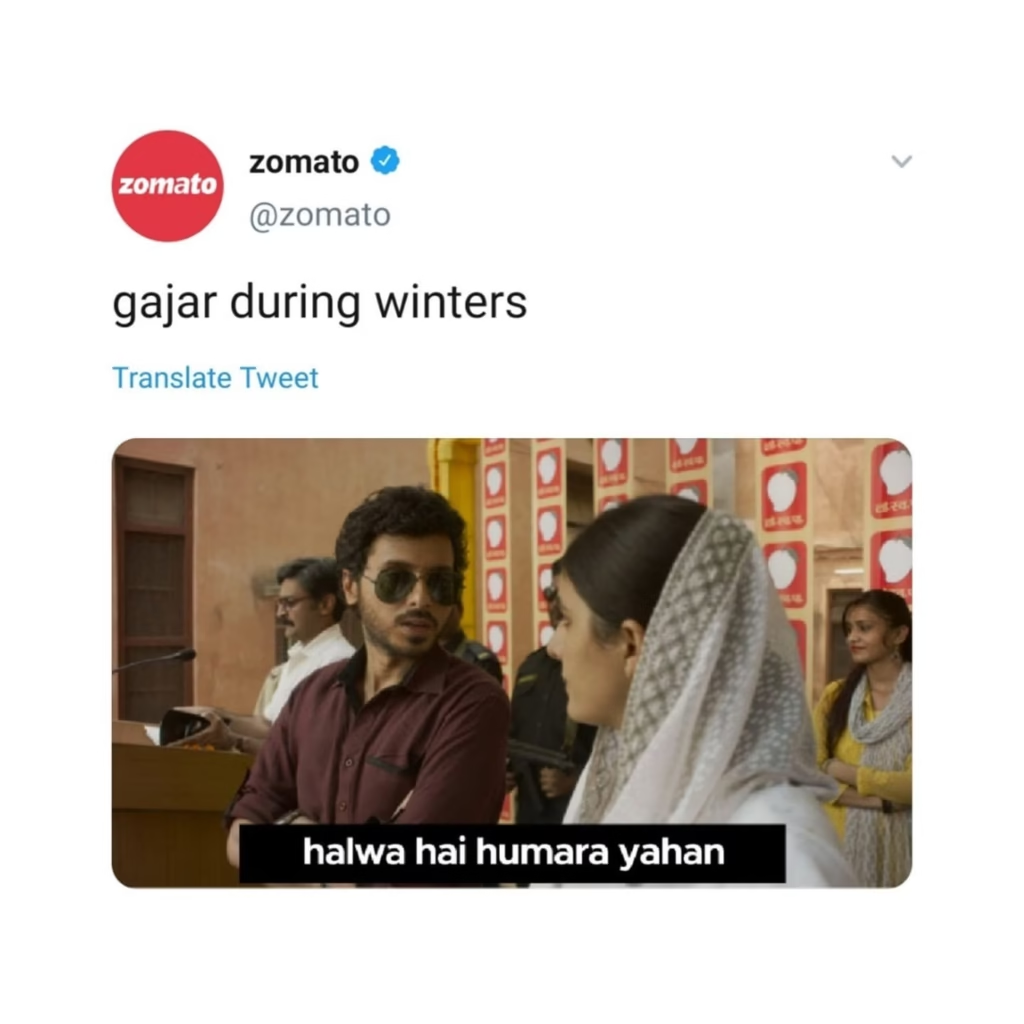
Zomato, India’s leading food delivery platform, achieved breakthrough engagement through culturally intelligent meme marketing. The brand leveraged a famous Bollywood dialogue “Doodh mangoge, doodh denge” (Ask for milk, we’ll give you milk), transforming it into their own campaign: “Doodh mangoge, biryani denge” (Ask for milk, we’ll give you biryani).
This strategy effectively connected with target audience millennials and Gen Z who are avid consumers of memes. Using a famous Bollywood dialogue that used wordplay led to increased engagement and social media sharing. They tapped into the zeitgeist, building a loyal following that strengthened the brand personality with food and movie nights. Zomato’s meme-fueled social media strategy has been credited with driving a 25% increase in customer engagement and shares over the entire year it ran.
Zomato’s success stemmed from understanding that meme marketing isn’t about pushing products; it’s about participating in cultural conversations. By using language and references that resonated deeply with Indian audiences, Zomato transformed from a service provider into a cultural commentator. The brand didn’t create memes; it recognized existing cultural moments and made them relevant to food delivery.
Netflix (Founded 1997, Modern Meme Strategy 2018 onwards)
Perspective: Entertainment Integration and Platform Optimization
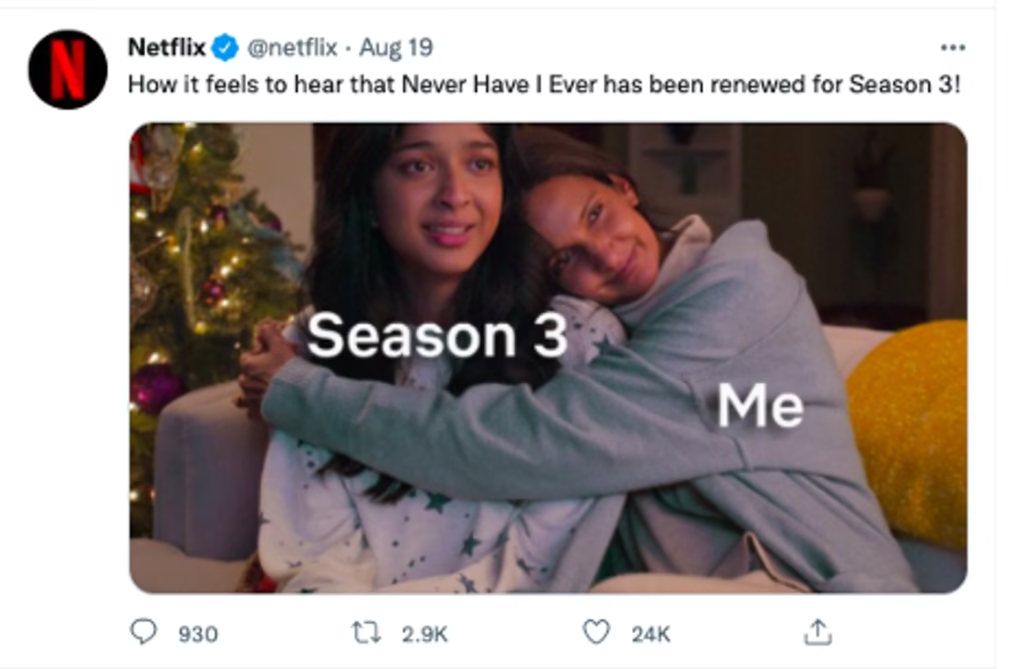
Netflix’s meme marketing approach differs fundamentally from Zomato’s. Rather than participating in existing cultural moments, Netflix creates meme-worthy content directly from its shows.
Netflix jumped into the meme phenomenon during the Bird Box challenge frenzy in 2018. Instead of backing away, Netflix embraced the unexpected trend with its own memes and participated in the cultural moment. Since then, Netflix meme marketing has been constant. The brand regularly turns scenes from hit shows like YOU into relatable memes. It’s quick, shareable, and built for how people actually use social media platforms.
Netflix’s strategy reveals a different meme marketing perspective. By recognizing that their content itself generates meme-worthy moments, Netflix converted entertainment into marketing assets. When audiences naturally extracted scenes from shows and created memes, Netflix leaned into the behavior rather than fighting it. The brand understood that each meme shared represented both organic engagement and free advertising to friends of the original sharer.
Comparative Insight: Zomato represents linguistic and cultural adaptation of existing memes, while Netflix represents content generation that naturally becomes meme material. Both succeed because they prioritize audience enjoyment over sales messaging.
MARKET GROWTH AND ROI METRICS (2022-2025)
1. Global Meme Marketing Industry Growth
| Year | Market Size (USD Million) | YoY Growth Rate | CAGR | Market Share Growth |
|---|---|---|---|---|
| 2022 | 3,800 | — | — | — |
| 2023 | 4,650 | 22.4% | — | 15% of digital ad spend |
| 2024 | 5,400 | 16.1% | — | 18% of digital ad spend |
| 2025 (Projected) | 6,100 | 12.9% | 21.6% (2020-2025) | 21% of digital ad spend |
Data Source: Market Research Future, GlobalWebIndex 2024-2025
2. Meme Marketing ROI and Engagement Metrics
| Metric | 2022 Value | 2023 Value | 2024 Value | 2025 Projection |
|---|---|---|---|---|
| Average Campaign ROI | 52% | 56% | 60% | 65% |
| Click-Through Rate (CTR) | 17% | 18% | 19% | 20%+ |
| Organic Engagement Rate | 55% | 57% | 60% | 62% |
| Cost Per Click (CPC) Reduction | 35% lower than traditional | 40% lower | 45% lower | 50% lower |
| Marketers Reporting Positive ROI | 89% | 91% | 94% | 96% |
Data Source: HubSpot Marketing Research, UNI ScholarWorks 2024-2025
3. Meme Content Performance vs Traditional Content
| Platform | Meme Reach Multiple | Meme Engagement vs Traditional | CTR Improvement | Viral Potential |
|---|---|---|---|---|
| 10x more | 60% higher | +14% vs email | Very High | |
| TikTok | 12x more | 65% higher | +18% vs regular video | Extremely High |
| Twitter/X | 8x more | 55% higher | +16% vs tweets | Very High |
| 9x more | 58% higher | +13% vs posts | High | |
| 6x more | 45% higher | +8% vs articles | Medium-High |
Data Source: Forbes, NYU Research, Brandwell.ai 2024-2025
CONCLUSION
The global meme industry has exploded from $2.3 billion in 2020 to a projected $6.1 billion by 2025, representing 21.6% annual growth that outpaces most traditional advertising sectors. Memes generate 10x more organic reach and 60% higher engagement rates compared to traditional marketing content.
The data reveals a fundamental shift in how audiences consume advertising. Analysis published by Amra and Elma shows meme marketing channels delivered a reported ROI of around 60% in early 2025. This return on investment significantly outperforms many traditional advertising channels while requiring lower upfront investment and creative production costs.
What makes meme marketing highly effective operates on three levels. First, psychological accessibility means audiences feel entertained rather than sold to, lowering defensive barriers against messaging. Second, cultural relevance ensures memes reflect genuine audience concerns and humor rather than corporate interpretations of what audiences find funny. Third, virality mechanics amplify reach exponentially as audience members share content with their networks, creating organic distribution at near-zero marginal cost.
Zomato proved effectiveness through linguistic and cultural precision, driving 25% engagement increases by speaking to audiences in their own language and reference framework. Netflix demonstrated that entertainment naturally becomes marketing when the brand aligns with audience behavior rather than fighting it. Both success cases prioritized audience experience over sales conversion, yet achieved superior commercial outcomes precisely through this inversion of priorities.
Leave a Reply