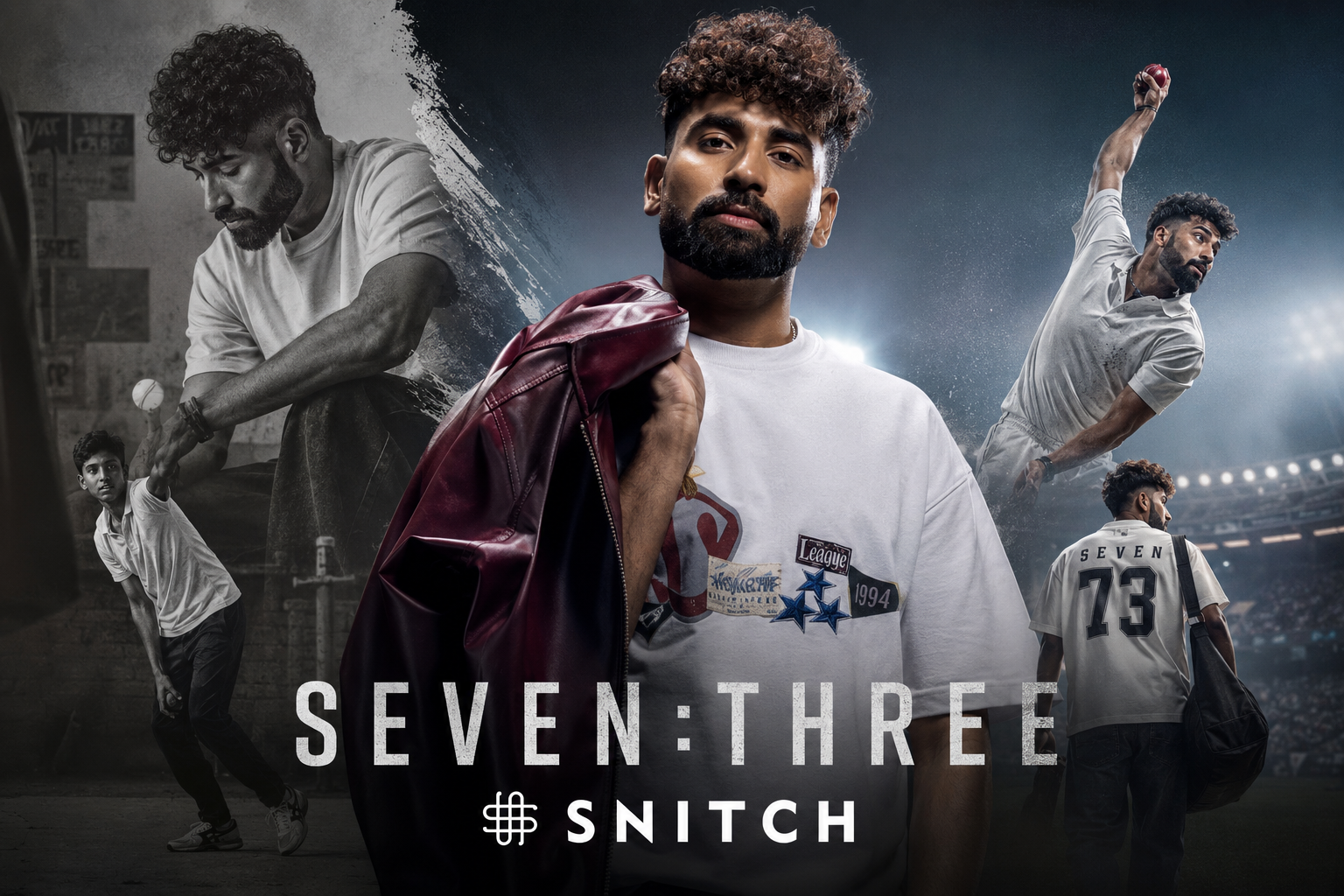

The SNITCH and Mohammed Siraj collaboration introduces the “SEVEN:THREE” campaign film. This film redefines celebrity fashion partnerships. Rather than following a conventional celebrity-fashion narrative, it focuses on the realities, doubts, and struggles that shaped Siraj’s rise. Instead of a typical product showcase, the campaign presents his personal journey as the core narrative. As a result, fashion becomes a metaphor for resilience and earned success.
The campaign opens with Siraj sitting alone. Background voices question whether he could ever make the Indian cricket team. This immediately sets the tone for a story built around doubt, perseverance, and resilience. The film then traces his unconventional path. Notably, he started bowling seriously at age 16 without formal coaching. One key visual moment captures the transition from a tennis ball to a leather cricket ball. This symbolizes his evolution from street cricket to professional sport.
The accompanying 44-SKU collection blends contemporary streetwear with sport-inspired aesthetics. It features oversized and regular-fit t-shirts, relaxed polos, shirts, cargos, denim, and utility separates. Additionally, the pieces carry statement graphics with messages such as “Made for Winners,” “Play with Purpose,” and “Resilient in Spirit.” The designs balance relaxed silhouettes with strong visual storytelling. They combine grounded tones, modern textures, and sharp detailing.
3 marketing strategies used by Snitch:
Strategy 1: Authentic Storytelling and Purpose-Driven Narrative
The campaign positions SEVEN:THREE around resilience, discipline, self-belief, and hard work, values deeply associated with Siraj’s personal journey from street cricket to representing India on the global stage. SNITCH moved beyond traditional celebrity endorsement by making Siraj’s real struggle the brand narrative itself. The campaign anchors around the thought, “You don’t get what you wish for, you get what you work for,” transforming the collection into an aspirational lifestyle statement rather than mere fashion products.
Strategy 2: Values-Based Target Audience Alignment (Gen Z and Millennial Consciousness)
For SNITCH, this campaign strengthens its positioning among digitally native Gen Z and millennial consumers who increasingly seek authenticity, relatability, and emotional connection from fashion brands. The brand deliberately selected a cricketer whose journey mirrors the hustle culture values celebrated by younger consumers. SNITCH solved the apparel problem by treating clothing like software updates, building a Read, React, and Replenish engine that translates directly to brand loyalty among Gen-Z impulse purchasers.
Strategy 3: Cultural Relevance and D2C Celebrity Integration Model
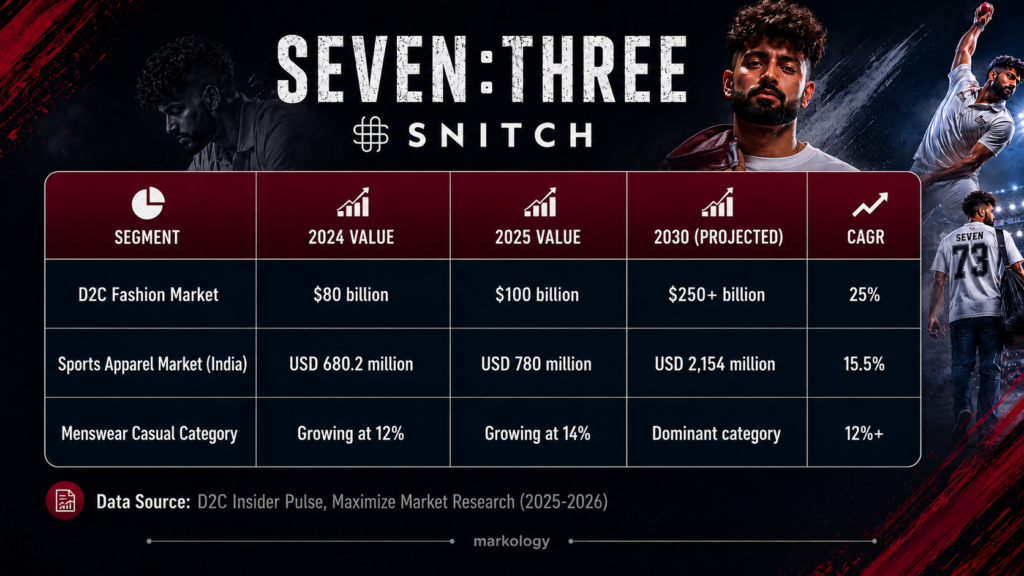
The campaign reflects the growing importance of emotional branding, influencer marketing for D2C, and community-driven engagement strategies as D2C market trends continue shifting toward identity-led consumption. By partnering with Siraj, SNITCH positioned itself within India’s emerging D2C ecosystem where celebrity collaborations carry cultural weight and drive community engagement rather than simple product promotion.
What founders had to say
Chetan Siyal, Chief Marketing Officer at SNITCH, stated: “With SEVEN:THREE, we wanted to tell a story that goes beyond fashion. Siraj’s journey represents resilience, hunger, and self-belief, values that strongly connect with today’s generation. The campaign film captures that raw emotion and honesty, while the collection translates the same mindset into fashion that feels bold, expressive, and culturally relevant.”
Mohammed Siraj reinforced this philosophy: “This collection reflects a mindset I strongly connect with that nothing comes easy, and every achievement is earned through hard work and belief in yourself. A big part of my journey has been believing in my own strength, especially during the toughest phases. Discipline, hard work, resilience, and self-belief are what shaped me, and I wanted SEVEN:THREE to reflect that same spirit for everyone working hard to build their dreams.”
These statements reveal strategic intent beyond fashion collaboration. Siyal’s emphasis on storytelling over product features indicates SNITCH’s commitment to building brand identity through narrative. His selection of words like “raw emotion” and “honesty” signals a departure from polished, aspirational advertising toward authentic, relatable content.
Siraj’s perspective, with 15 million Instagram followers, adds credibility to the narrative. His personal investment in the messaging transforms the partnership from transactional celebrity endorsement into genuine collaboration. This authenticity resonates with Gen Z consumers who value transparency and reject inauthentic brand partnerships.
Metrics & Data
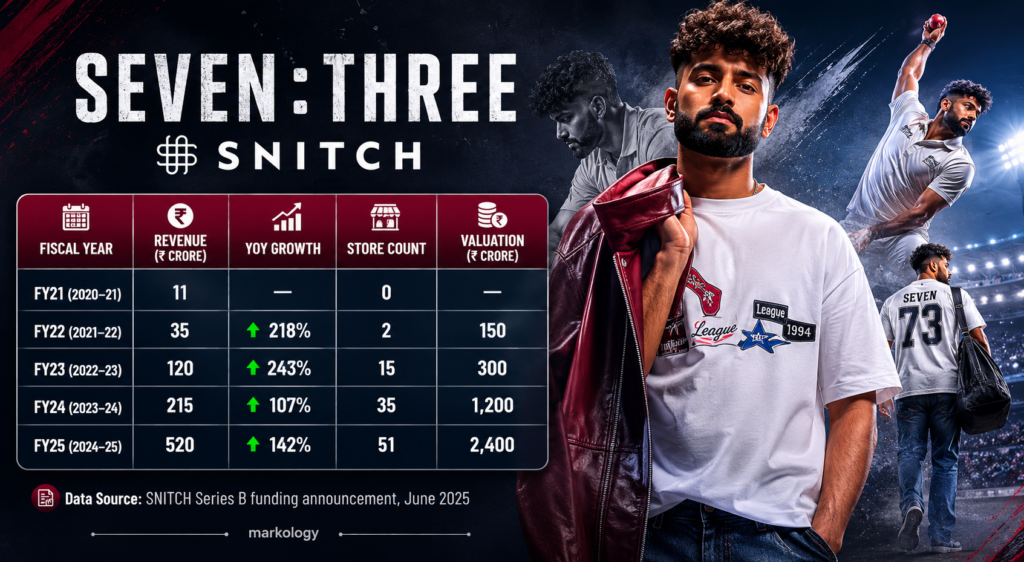
SNITCH Brand Growth Trajectory
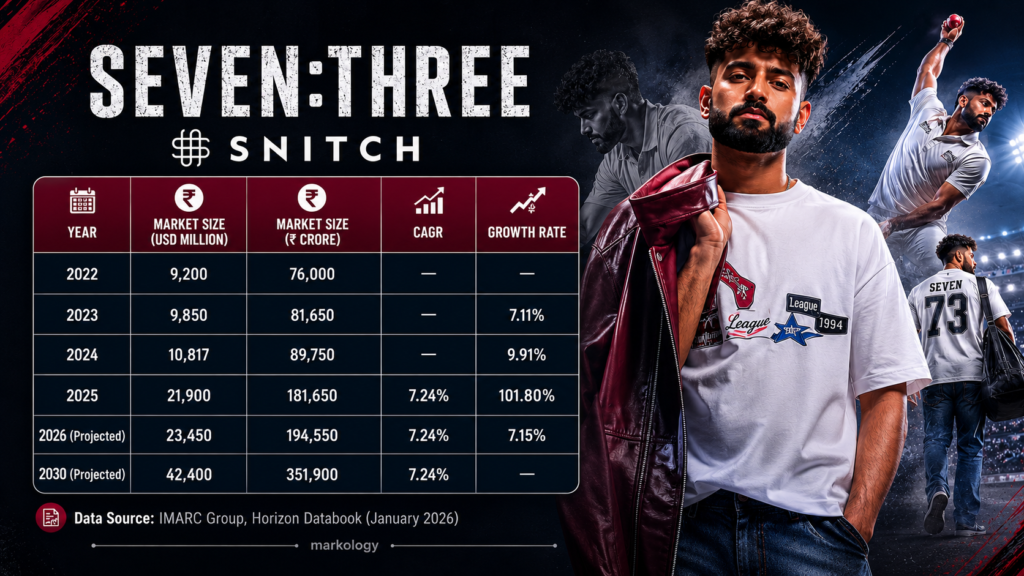
India Menswear Market Growth (2022-2030)
D2C Fashion and Sports Apparel Market Growth
CONCLUSION
The SEVEN:THREE campaign represents a paradigm shift in how brands approach celebrity collaborations. Rather than borrowing Siraj’s influence, SNITCH leveraged his journey as the brand narrative itself. SNITCH scaled from ₹11 crore in FY21 to ₹520 crore in FY25, achieving 47x revenue growth in four years while maintaining profitability and expanding to 51 stores.
The campaign’s effectiveness lies in three factors. First, it solved an authenticity problem facing contemporary fashion brands by positioning the collection as an extension of lived experience rather than aspirational fantasy. Second, the 44-SKU range captures the diversity of the target audience’s lifestyle needs across multiple price points and fit preferences. Third, the campaign aligns perfectly with India’s menswear market expansion, which is growing at 7.24% CAGR with casual and streetwear categories leading this growth.
The India menswear market reached USD 21.9 billion in 2025 and is expected to reach USD 42.4 billion by 2034. SNITCH’s SEVEN:THREE campaign positions the brand at the intersection of this growth, capturing Gen Z and millennial consumers who demand cultural relevance alongside quality and affordability.
Leave a Reply